
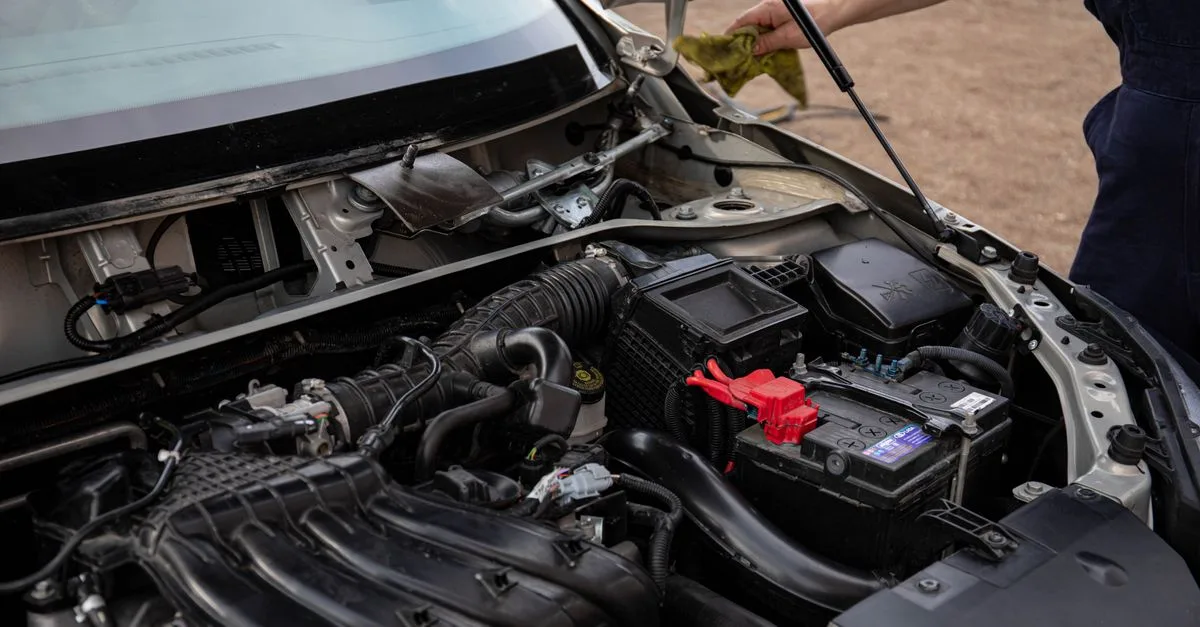
The first time I saw someone try to charge a lithium bank through an old Sure Power isolator, the owner was baffled that his batteries never showed more than 90 percent state of charge no matter how long he drove. The isolator wasn’t broken. It was doing exactly what isolators do, which is simply connect two battery banks together and let voltage sort itself out. Lithium batteries don’t sort themselves out that way, and that gap is the whole reason this comparison matters.
The quick version
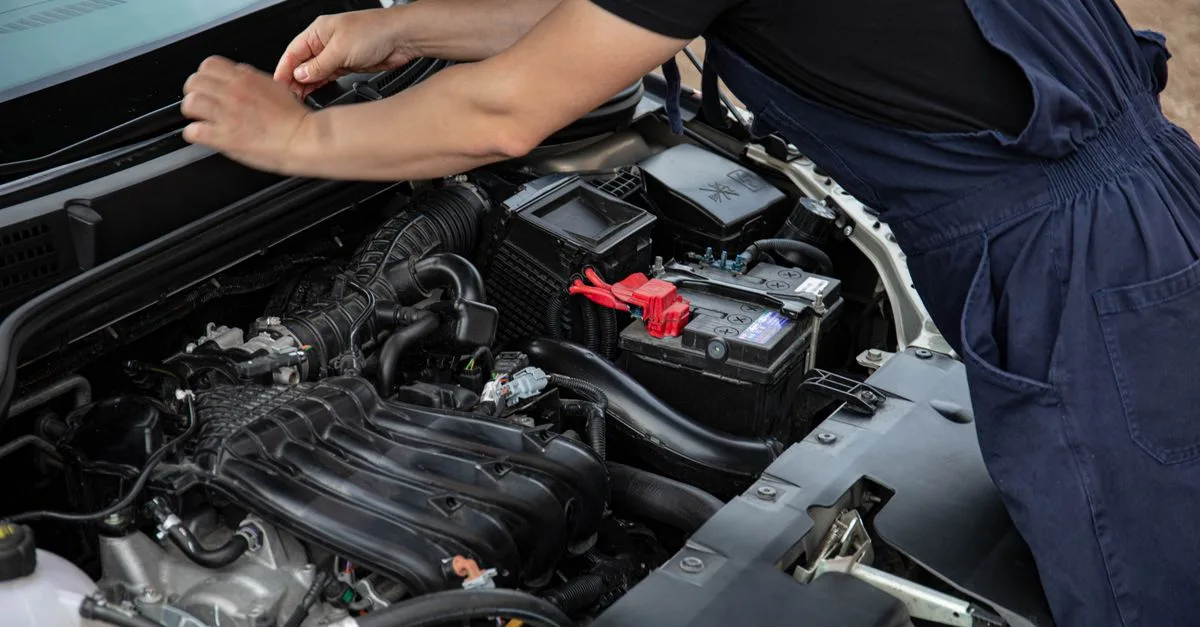
- A battery isolator (diode or relay-based) just connects the starter battery to the house battery when the engine runs. It does not regulate voltage or current.
- A DC-DC charger is a smart, multi-stage charger that takes alternator power and converts it into a proper lithium charge profile, typically bulk/absorption/float at 14.2 to 14.6 volts.
- Isolators were built for lead-acid pairs with similar voltage needs. Lithium batteries need controlled charging that isolators cannot provide.
- Smart alternators (common on newer trucks and vans since roughly 2012) make isolators even less reliable because output voltage constantly changes.
- For any serious lithium setup, budget $150 to $400 for a DC-DC charger like a Victron Orion-Tr Smart, Renogy DCC50S, or CTEK D250SE instead of a $40 to $80 isolator.
What a battery isolator actually does
A traditional battery isolator is a passive or semi-passive device, usually built around diodes or a relay, that sits between your starter battery and your house bank. When the alternator is running and voltage rises, the isolator closes the connection and lets current flow from the starter circuit into the house battery. When the engine shuts off, it opens the connection so your house loads can’t drain your starter battery overnight.
That’s it. That’s the whole job. Older diode isolators like the Sure Power 1315 or basic Blue Sea ACRs (automatic charging relays) don’t change voltage, don’t limit current, and don’t know or care what chemistry is sitting on the other side of the wire. They were designed in an era when almost everyone had two lead-acid or AGM batteries with nearly identical charging needs, so a simple pass-through connection worked fine.
What a DC-DC charger does differently
A DC-DC charger is an active, regulated charging device. It takes the raw, often unstable voltage coming from your alternator and converts it into a proper multi-stage charge profile matched to your battery chemistry. For LiFePO4, that typically means a bulk stage pushing close to the charger’s max output, an absorption stage holding around 14.2 to 14.6 volts, and a float stage dropping to roughly 13.6 volts once the bank is full.
Units like the Victron Orion-Tr Smart 12/12-30, the Renogy DCC50S, and the CTEK D250SE all do this. They also isolate the two battery systems electrically, so you get the isolator’s core safety function bundled in with actual smart charging. This is why most lithium installers now treat isolators as obsolete for house battery charging and use them, if at all, only for simple lead-acid backup circuits.
Note: Some people confuse a DC-DC charger with a simple voltage booster. It’s more than that. A good DC-DC charger reads your lithium battery’s actual charge state (some units integrate with a shunt or BMS) and adjusts current accordingly, tapering off as the bank approaches full rather than just dumping raw amperage at it.
Why lithium exposes the isolator’s weakness
Lead-acid and lithium batteries have very different relationships with voltage. A lead-acid battery will happily accept a wide range of charging voltages and just charge more slowly or less completely at the low end. Lithium is pickier. LiFePO4 cells want to see something close to 14.2 to 14.6 volts to reach a real full charge, and they will also accept high current right up until they’re nearly full, which is very different behavior from lead-acid’s gradual taper.
An isolator just hands your lithium bank whatever the alternator happens to be producing. On an older, dumb alternator that might be a fairly stable 14.0 to 14.4 volts, which sounds close enough. But even in that best case scenario, you’re not getting a proper absorption and float cycle, so the bank’s internal cell balancing and the BMS never get a clean, predictable charge event to work with.
The smart alternator problem
Most vehicles built since roughly 2012, and nearly all of them since 2016, use smart or variable-voltage alternators controlled by the engine computer. These alternators intentionally cycle voltage up and down, sometimes dropping to 12.9 or 13.2 volts, to reduce engine load and improve fuel economy. An isolator passes that fluctuation straight through.
Your lithium bank might see 13.1 volts for long stretches of a highway drive, which is barely a trickle charge for LiFePO4. I’ve talked to Sprinter and Transit owners who drove for six hours and came home with a bank at 60 percent, convinced their battery was defective. It wasn’t. The isolator was just letting the smart alternator starve it. For more on why this happens, see our guide on smart alternators and lithium charging.
A real-world comparison
| Feature | Battery Isolator | DC-DC Charger |
|---|---|---|
| Voltage regulation | None, passes alternator voltage directly | Yes, multi-stage profile tuned to lithium |
| Works with smart alternators | Poorly, inherits voltage swings | Yes, designed to buffer variable input |
| Typical cost | $40 to $100 | $150 to $400 |
| Full charge on lithium | Rarely, often stalls at 80 to 95 percent | Yes, reaches absorption and float |
| Protects starter battery | Basic voltage-sensing cutoff | Configurable low-voltage disconnect |
| Typical amperage | Whatever alternator provides, unregulated | Fixed and adjustable, commonly 20 to 60A |
The mistake I see constantly
The most common error isn’t choosing an isolator on purpose. It’s inheriting one. Someone converts an old work van or a used RV that already has a Sure Power or Battery Doctor isolator installed for the original lead-acid house battery, swaps in a lithium bank, and assumes the existing wiring is fine because “it’s already hooked up.”
It technically works, in the sense that current flows. But the owner ends up chasing phantom problems for months, like a battery that shows full voltage at rest but delivers far less usable capacity than it should, because it was never actually reaching a true 100 percent charge. If you’re troubleshooting a lithium bank that won’t charge from the alternator, this is one of the first things worth checking. Our DC-DC charger not charging troubleshooting guide covers the diagnostic steps either way.
When an isolator is still fine
I won’t pretend isolators are useless. If you’re running a second lead-acid or AGM battery, an isolator is a perfectly reasonable, budget-friendly choice, and Blue Sea Systems still makes solid ACRs for exactly that job. Isolators also still show up as a secondary safety disconnect in some lithium installs, wired alongside a DC-DC charger rather than instead of one, though that’s more belt-and-suspenders than necessary in most builds.
Where isolators genuinely fail is any setup where lithium is the destination battery and full, reliable charging matters. If you’re still deciding whether you need charging hardware at all for your setup, start with whether you need a DC-DC charger before you get into brand comparisons.
What this means for your wiring plan
If you’re converting an existing lead-acid dual-battery van or RV to lithium, budget for a DC-DC charger swap as part of the project, not an afterthought. Pulling an old isolator and running a properly sized DC-DC charger, matched to your alternator’s output and your battery bank’s capacity, is one of the higher-value upgrades you can make. Our full DC-DC charger guide for lithium systems walks through sizing, wiring, and setup from there.
Check the ABYC E-11 standard for wiring and overcurrent protection guidance, and consult Victron’s Orion-Tr Smart documentation for real-world wiring diagrams before you buy anything.
Sorting this out before you’re stuck on the side of the road with a half-charged battery bank saves a lot of frustration. An isolator will connect your batteries. A DC-DC charger will actually charge them. For lithium, only one of those two things matters.