I get this question at least once a month from someone staring at a 400 amp-hour lithium bank and a factory alternator that just cannot keep up. “What if I just add a second alternator?” It is a fair question, and for a certain kind of build, it is the right answer. For most people, it is an expensive detour around a problem that a properly sized DC-DC charger already solves.
The quick version
- A dedicated second alternator gives you a separate, high-output source just for your house battery, isolated from the starting system.
- You still need a DC-DC charger or a smart regulator between the alternator and your lithium bank, since raw alternator output is not lithium-safe on its own.
- Expect $600 to $1,800 in parts and often $2,500 to $4,000 installed once bracket fabrication and belt work are factored in.
- Most vans and truck campers never need this. A 40 to 60 amp DC-DC charger off the stock alternator covers a 200 to 400Ah bank just fine.
- Dual alternators earn their cost on high-draw, short-drive rigs: mobile workshops, ambulances, overlanders doing frequent short hops with big compressor fridges and inverters running constantly.
What a dual alternator setup actually is
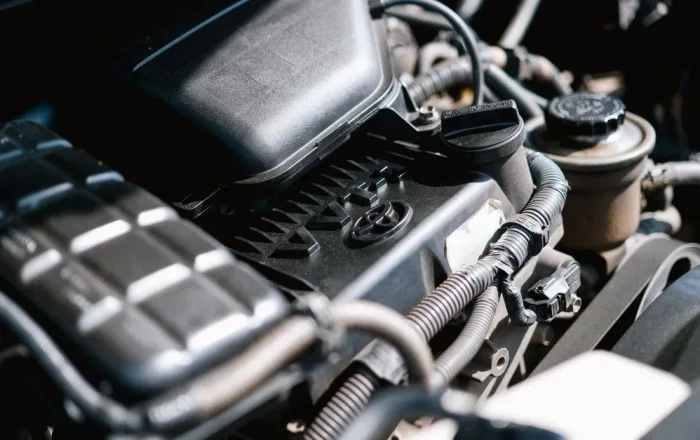
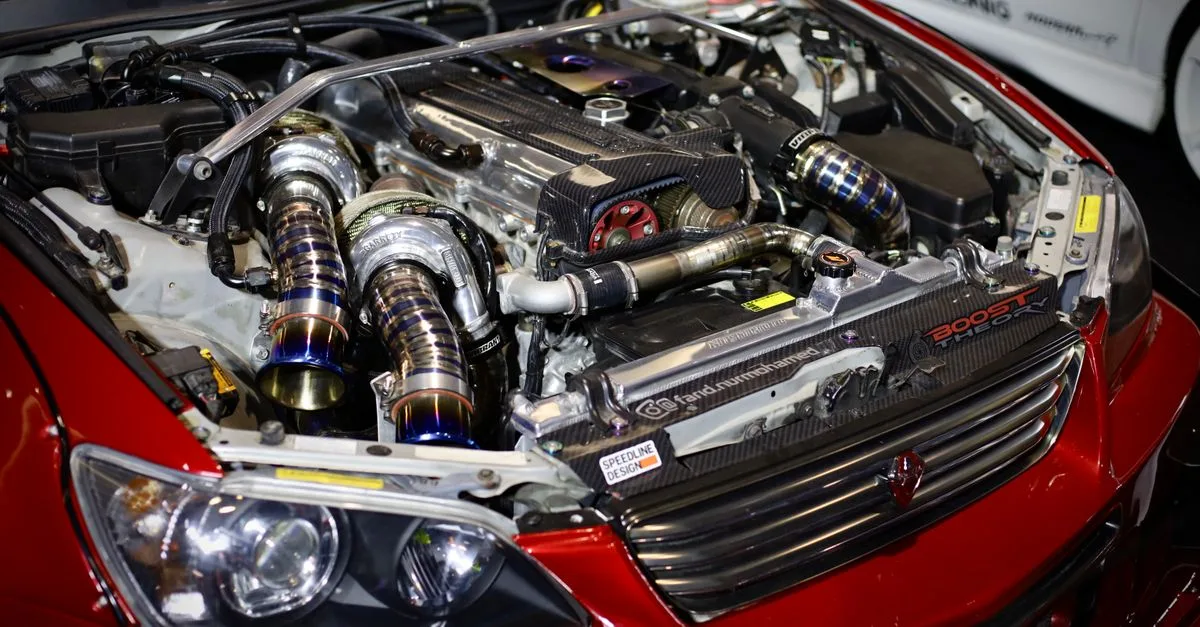
A true dual alternator setup means your engine bay has two separate alternators bolted to the block, each driven off its own pulley or a shared serpentine belt with extra idlers. One stays dedicated to the starting battery and factory electrical loads, exactly as it came from the factory. The second is wired exclusively to your house lithium bank, usually through its own DC-DC charger or a programmable regulator.
This is different from just swapping in a bigger single alternator. A high-output single alternator (Nations, Powermaster, and Mechman all make these) can push 250 to 400 amps total, but that output is still shared across your starting battery, factory loads, and house bank through whatever isolation device you use. A second dedicated unit keeps the two systems physically and electrically separate from the crank pulley forward.
The scenario where it actually makes sense
I worked with a guy converting a Ford Transit into a mobile dog grooming van. He had two clipper motors, a wet/dry vacuum, an inverter running a hydraulic table lift, and a 600Ah Battle Born bank. His problem was not battery capacity, it was recharge speed between short 15-minute drives from one client’s driveway to the next.
His stock 155 amp alternator, even maxed out through a 60 amp DC-DC charger, was only putting back a fraction of what he pulled during a session. A second, dedicated 200 amp alternator feeding a Victron Orion-Tr Smart 12/12-30 gave him real recovery between stops. That is the use case: high draw, short drive cycles, and a job that does not tolerate a dead battery.
Compare that to a weekend camper running a 100Ah bank, a compressor fridge, and some lighting. That rig will fully recharge from 50 percent in under two hours on a single alternator setup, and a second one would just be dead weight and complexity.
What it costs, realistically
Parts pricing varies a lot by chassis. A basic second alternator and bracket kit for a common Ford, GM, or Ram platform runs $400 to $900 for the alternator itself. Bracket kits designed for that specific engine (not generic ones) add another $200 to $600. If your engine bay needs a custom idler pulley and a longer serpentine belt cut to spec, budget extra for machine shop or dealer parts work.
| Item | Typical Cost Range |
|---|---|
| Second alternator (100 to 250A) | $400 to $1,200 |
| Bracket and pulley kit | $200 to $600 |
| DC-DC charger or smart regulator | $150 to $500 |
| Wiring, fusing, cable (per ABYC gauge sizing) | $100 to $300 |
| Professional installation labor | $800 to $2,000 |
That puts a full installed dual alternator system in the $1,650 to $4,600 range depending on your chassis and whether you DIY the wiring. For comparison, a quality 60 amp DC-DC charger like the Victron Orion-Tr Smart or Renogy DCC50S installed properly runs $400 to $700 total. That gap is the real decision point.
Warning: Never wire a second alternator’s output straight to a lithium battery without a charger or regulator in between. LiFePO4 cells need tightly controlled absorption and float voltages, typically 14.2 to 14.6V for a 12V bank, and raw alternator output can spike well past that under light load, tripping the battery’s internal BMS or shortening cell life over time.
Do you need this, or do you need a bigger belt and a better DC-DC charger
Before anyone commits to a second alternator, I walk through three questions with them. First, what is your actual daily drive time? If you are driving two or more hours a day, your stock alternator through a well-sized DC-DC charger has plenty of time to fully recharge even a 400Ah bank. Second, what is your battery capacity relative to daily draw? A 300Ah bank running lights, a fridge, and a fan does not need dual alternators, full stop.
Third, and this is the one people skip: have you actually confirmed your stock alternator has spare capacity? Many factory alternators are already running near their rated output just covering ECU, lighting, HVAC blower, and infotainment loads. You can check this with a simple clamp meter test at idle and under load, or read your specific alternator’s amp rating off the housing and compare it to your actual available amperage after factory loads. If you have 40 to 60 amps of headroom, a single DC-DC charger installation is almost always the better first move.
A mistake I see constantly
Someone spends $3,000 on a second alternator setup expecting it to solve slow charging, then discovers their real bottleneck was cable gauge the whole time. If you are running 20 feet of 6 AWG wire between the alternator and a 60 amp DC-DC charger, you are losing voltage to resistance before the charger even sees full input. Doubling your alternator output does nothing if the wire run between it and the battery cannot carry the extra current.
Always size cable to the full rated output of whatever charger you are using, following ABYC E-11 wiring standards for ampacity and voltage drop, before you even think about a second alternator. I have seen more “my charging is still slow” complaints solved by a wire upgrade than by any hardware addition.
How the DC-DC charger fits into a dual alternator system
Even with two alternators, the lithium bank still needs a proper charge controller between it and the second alternator’s output. Skipping this step is the single most common wiring mistake in these builds. The DC-DC charger’s job is to take variable alternator voltage and current and convert it into the clean, profile-matched charge curve your lithium cells expect.
If you already understand the basics of sizing one of these units for a single-alternator setup, the same math applies here, you are just feeding the charger from a dedicated source instead of a shared one. Some installers also skip the DC-DC charger entirely in favor of a fully programmable smart alternator regulator (Balmar and Wakespeed both make marine-grade units used on boats and heavy-duty rigs), which can output a lithium-specific charge profile directly. That approach is common on boats charging lithium from the engine, where space and weight budgets favor consolidating hardware.
What I would actually tell you to do
If you are reading this because your charging feels slow, start with the cheaper, simpler fix. Confirm your DC-DC charger is sized correctly, check your wire gauge against ABYC tables, and verify your alternator actually has spare output before you touch a bracket kit. A dual alternator setup is a real solution for a specific problem: high continuous draw, short drive cycles, and a stock alternator that is already maxed out on factory loads.
For everyone else, a single well-installed DC-DC charger will get a 300 to 400Ah lithium bank from 20 percent to nearly full in a two to three hour drive, which covers how most people actually use their rigs. Save the second alternator for the day your use case genuinely demands it, not because it sounds like the more serious upgrade.