
I got an email last month from a guy building out a Sprinter who had just watched a YouTube video about EG4 server rack batteries and wanted to know if he should scrap his 12V plan entirely. He had already bought a Victron 12V system. He was two days from wiring it in. This question comes up constantly now, so let’s actually work through it instead of just repeating what forums say.
What a server rack battery actually is

Server rack batteries were designed for telecom cabinets and data center backup power, not vans. They are LiFePO4 cells stacked into a rectangular case shaped to slide into a standard 19 inch rack, usually running at 48V nominal (roughly 43V empty to 58V full, depending on the battery management system settings).
Brands like EG4, SOK, and Fortress Power dominate this space. A typical EG4 LL 48V 100Ah unit stores about 5.12 kWh and costs somewhere around $1,800 to $2,200 depending on the sale cycle, which works out to roughly $350 to $430 per kWh. That is genuinely competitive with, and sometimes cheaper than, a comparable stack of 12V batteries.
The catch is that these batteries were never designed to be jostled down a washboard forest service road for six hours. Some manufacturers explicitly limit warranty coverage for mobile applications, so read the fine print before you assume RV use is covered the same as a stationary install in someone’s garage.
What a 12V lithium battery gets you instead
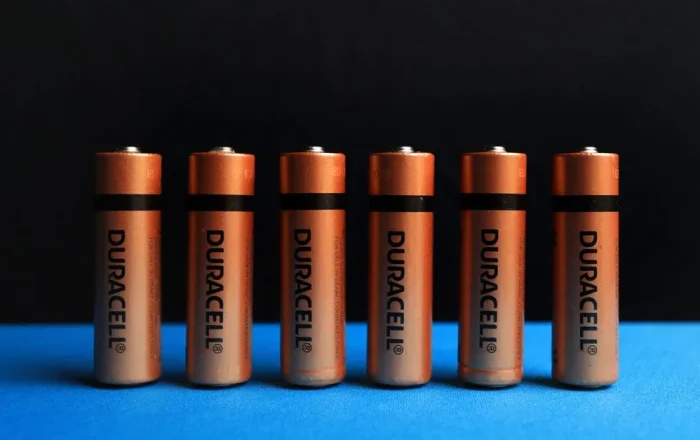
A standard 12V lithium battery, something like a Battle Born BB100, Li Time 100Ah, or Ampere Time 100Ah, is built around the existing 12V architecture that basically every RV and van accessory already expects. Your fridge, water pump, lights, furnace fan, and factory wiring all want 12V, full stop.
These batteries typically run $700 to $1,000 for a 100Ah unit at 12.8V nominal, giving you about 1.28 kWh per battery. You stack two, three, or four in parallel to hit your target capacity, and every component downstream, chargers, inverters, monitors, stays in the 12V ecosystem that the entire RV industry supports.
The real advantage of 12V is compatibility, not raw cost per kWh. You are not fighting the platform to make it work with the rest of the vehicle.
Where the voltage math actually bites you
Here is the part people skip past in YouTube comparisons. At 12V, pulling 1,500 watts (a typical 1500W inverter under moderate load) draws about 125 amps from the battery bank. That is why 12V systems above 3,000 watts of inverter capacity need genuinely enormous cable, 4/0 gauge in some cases, plus expensive Class T fuses and busbars rated for the amperage.
At 48V, that same 1,500 watt draw is only about 31 amps. Cable can be much thinner, voltage drop is less of a headache, and fusing gets cheaper and safer. This is exactly why data centers and increasingly larger van and skoolie builds with induction cooktops, AC units, and big inverters are moving toward 48V.
| Factor | 12V (standard RV battery) | 48V (server rack battery) |
|---|---|---|
| Compatibility with factory RV wiring | Direct fit | Needs a 48V to 12V converter for factory loads |
| Cable size at 1,500W load | ~125A, needs 2/0 to 4/0 cable | ~31A, 6 to 8 AWG often sufficient |
| Typical cost per kWh | $550 to $780 | $350 to $430 |
| Inverter availability | Huge selection (Victron, Xantrex, Renogy) | Smaller but growing (Victron Multiplus II 48V, Schneider) |
| Mobile/vibration rating | Common, many RV-rated models | Inconsistent, check datasheet |
| Best fit | Under 3,000W continuous loads | 3,000W and up, or all-electric builds |
The hidden cost nobody mentions: your 12V accessories still need 12V
This is the mistake I see constantly with first-time builders excited about the 48V price per kWh. Your furnace, water pump, fridge, ceiling fan, and interior lighting are all 12V. Go full 48V and you now need a DC-DC step-down converter, something like a Victron Orion-Tr 48/12-30, just to keep those factory systems alive.
That converter adds $200 to $400 and another failure point in the system. Suddenly the savings from cheaper rack battery capacity get eaten by a component you would never have needed in a straight 12V build.
Warning: Never wire a 48V rack battery straight into any 12V-rated device, inverter, or charge controller. The voltage difference will fry the component instantly, often with a visible pop and a burning smell that means an expensive part is dead.
A real scenario: two builds, same power needs
I helped a couple compare notes on two similar Ford Transit builds last year. Both wanted around 400Ah of usable capacity and a 3,000 watt inverter for occasional air conditioning use.
Builder A went 12V with four Battle Born 100Ah batteries in parallel, a Victron MultiPlus 3000, and 2/0 cable throughout the main run. Total battery cost landed near $3,600, plus roughly $600 in heavy cable and Class T fusing.
Builder B went 48V with two EG4 LL 48V 100Ah units in series-parallel (about 200Ah at 48V, or 9.6 kWh total), a 48V inverter, and a step-down converter for the factory 12V circuits. Battery cost was around $4,000, cable costs dropped to maybe $150, but the converter and a less common 48V inverter added back close to $900. In the end the two builds landed within a few hundred dollars of each other, and Builder A had an easier time finding replacement parts on the road.
When 48V genuinely wins
If you are building a skoolie or a large converted box truck with an induction cooktop, residential-style AC, and heat pump all running off inverter power at once, 48V starts making real sense. Once continuous loads climb past 4,000 to 5,000 watts, the cable and fusing savings at 48V become significant rather than marginal.
It is also worth considering if you already know you want a whole-home style inverter like the Victron Multiplus II 48/5000, which is designed around 48V input from the ground up.
Tip: If you are unsure which voltage fits your build, work backward from your inverter size before choosing batteries. Anything under 2,000 to 2,500 continuous watts rarely justifies the added complexity of going 48V in a van or RV.
Where server rack batteries fall short for mobile use
Beyond the voltage mismatch, a lot of rack batteries lack the vibration testing and UL 1973 mobile certification that dedicated RV and marine lithium batteries carry. Some also skip low-temperature charge cutoff, a feature that is standard on nearly every reputable 12V RV battery now (Battle Born, Li Time, and Ampere Time all build this in).
Check the datasheet for the specific BMS behavior below freezing before you buy. If it does not mention a charge cutoff around 32°F, you are relying on manual discipline to avoid plating lithium metal on the anode during cold charging, which permanently damages the cells.
If you are still deciding on voltage architecture at all, it is worth stepping back to compare 12V, 24V and 48V system voltages before locking in a battery brand.
Making the actual decision for your build
For the majority of van and RV conversions under 3,000 watts of continuous inverter load, 12V lithium remains the simpler, more serviceable, more universally supported choice. It is also easier to find replacement parts at a random RV supply store if something breaks on the road, which matters more than people expect until it happens to them.
For larger, power-hungry builds where cable size and amperage become a real engineering problem, a 48V server rack battery setup can save weight, cost, and complexity in the wiring itself, provided you budget for a proper inverter and step-down converter for your 12V accessories.
Whichever direction you lean, it helps to understand what you are actually comparing lithium against in the first place. Our LiFePO4 vs lead acid comparison covers the fundamentals, and if you are torn between assembling your own bank versus buying a finished unit, the drop-in lithium vs DIY breakdown is worth reading first. Once you have settled on a battery type, learning how to read a lithium spec sheet will help you compare rack and 12V options on equal footing rather than by price per kWh alone.
Do not let a cheaper per kWh number pull you into a voltage architecture your other components were not designed for. Start with your total load, work out the cable and inverter implications honestly, and pick the platform that keeps your build serviceable for the next ten years, not just cheap on the invoice today.