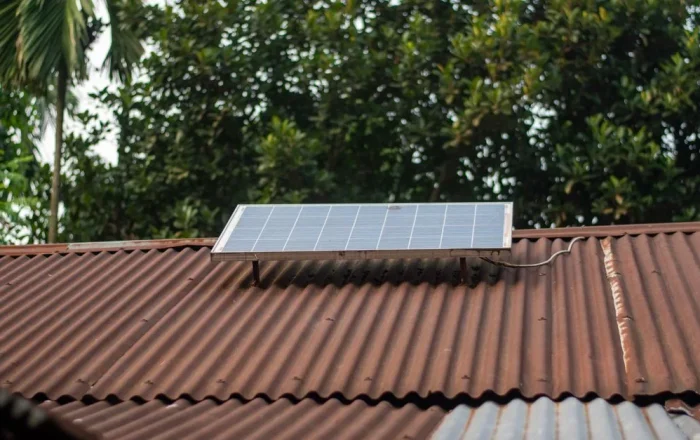

Short answer: Yes, solar can charge a lithium bank completely on its own, with zero shore power or generator backup, as long as your wattage and battery capacity are sized for your actual daily usage and you accept a few conservative days in winter or under heavy clouds.
I get this question constantly from people building out a van or upgrading an RV to lithium: “Can I really just run on solar and never plug in?” The honest answer is yes, I have friends who have not plugged into shore power in over two years. But I have also seen people ditch their generator too early and end up stuck at a trailhead with a dead battery bank and a phone at 4 percent.
The difference between those two outcomes almost never comes down to luck. It comes down to math done ahead of time.
What “solar alone” actually requires

For solar to be your only charge source, three things have to line up: enough panel wattage to replace what you use each day, an MPPT controller that actually understands lithium’s charge profile, and a battery bank with enough buffer capacity to ride out bad weather without dropping too low.
Miss any one of those and “solar only” becomes “solar mostly, plus anxiety.” A 150-watt panel is not going to run a 12-volt fridge, Starlink, and a laptop charger through a Montana winter, no matter how good your battery is.
If you have not settled on a system design yet, our full solar charging setup guide for lithium walks through the whole build from panel to busbar, and it is worth reading before you buy anything.
The daily energy math that decides everything
Start with your daily consumption in amp hours. A modest van setup running a compressor fridge, LED lights, a water pump, and phone charging typically pulls 40 to 60Ah per day at 12 volts. Add an inverter for a laptop or Starlink and you are often at 70 to 100Ah.
A rule of thumb I use in the field: one watt of solar in good sun produces roughly 0.3 to 0.4 amp hours per day once you account for angle, temperature losses, and MPPT conversion efficiency. So 300 watts of solar might realistically give you 90 to 120Ah on a clear summer day, but closer to 40 to 60Ah in December in the Pacific Northwest.
That swing is the whole story. Solar alone works great in June and gets a lot harder in January.
Tip: Size your solar for your worst realistic month, not your best one. If you plan to boondock through winter, use our guide to sizing solar for a lithium bank to run the numbers against your actual usage instead of a generic rule of thumb.
Why MPPT matters more with a solar-only setup
If you are leaning entirely on the sun, you cannot afford to waste any of it. This is where the difference between MPPT and PWM controllers becomes real money, not a spec sheet argument.
A PWM controller can waste 20 to 30 percent of your available solar energy compared to a quality MPPT unit like a Victron SmartSolar or a Renogy Rover. On a 400-watt array that gap can be the difference between finishing the day at 100 percent or stalling out around 80 percent.
I switched a client’s Sprinter van from a cheap PWM controller to a Victron 100/30 MPPT two years ago and their daily harvest jumped by roughly 25Ah with the exact same panels. Same sun, same roof, dramatically different result. See our breakdown of MPPT versus PWM for a lithium bank if you are still deciding.
A realistic scenario: two rigs, same panels, different outcomes
Picture two Sprinter vans parked side by side at a trailhead, both with 400 watts of rooftop solar and 300Ah of lithium. One owner runs lights, a fridge, and charges a phone. The other runs the same plus a 2000-watt inverter for a espresso machine and a laptop workstation every morning.
The first van cruises through a week of mixed sun and cloud without a second thought. The second van watches their battery monitor drop steadily and ends up running the engine for 20 minutes each evening just to top off, something a DC-DC charger paired with solar handles far better than idling.
Same hardware, wildly different reality. That is why “can solar alone charge lithium” always needs a follow-up question: charge it for what kind of use?
The common mistake: sizing for the battery, not the load
The mistake I see constantly is people sizing solar to match their battery bank’s capacity rather than their daily consumption. Someone buys a 300Ah lithium bank because it is a popular size, then adds 200 watts of solar because that is what fit on the roof, without ever calculating whether 200 watts can actually refill 300Ah worth of daily use.
A 300Ah battery with 200 watts of solar is a battery you slowly draw down over a week of boondocking, not a system that stays topped off daily. That is not necessarily wrong, plenty of weekend campers run exactly that setup on purpose, but it needs to be a choice, not an accident.
What happens on genuinely bad weather days
Even a well-sized system has limits. Three straight days of heavy overcast in the Pacific Northwest can drop solar output to 10 to 15 percent of rated capacity. This is where your battery’s buffer capacity and your own conservation habits carry you through.
Cold climates add another wrinkle. Charge current typically needs to be reduced or paused below freezing unless your battery has an internal heating element, like many Battle Born and Li Time models now include. Our winter solar guide for RVs covers how to keep panels producing and batteries safe when temperatures drop.
| Solar array | Battery bank | Best for | Winter reliability |
|---|---|---|---|
| 200W | 100Ah | Weekend trips, light use | Marginal, expect shortfalls |
| 300-400W | 200Ah | Full-time, moderate use | Workable in most regions |
| 600W+ | 300-400Ah | Full-time, heavy inverter use | Solid with occasional backup |
Troubleshooting when solar isn’t keeping up
If your battery is dropping day over day even in decent sun, the problem is usually one of a handful of things: dirty or shaded panels, a controller still set to a lead-acid charge profile, undersized wire causing voltage drop, or consumption that has crept up without you noticing.
- Confirm your controller’s absorption voltage is set correctly for LiFePO4, typically 14.2 to 14.6V
- Check panels for shading from vents, AC units, or antennas at different times of day
- Verify wire gauge and connections are not causing voltage drop between panels and controller
- Log daily amp hours in and out with a battery monitor like a Victron BMV-712 or SmartShunt
Our troubleshooting guide for solar not charging lithium goes deeper into diagnosing each of these if you are already seeing a shortfall.
So, can you actually go solar only
For most moderate-use rigs with correctly sized panels and a battery bank with real buffer capacity, yes, solar alone comfortably keeps a lithium bank charged for the vast majority of the year. The exceptions are heavy inverter loads, extended cloudy stretches, and deep winter at northern latitudes, situations where a lot of experienced boondockers still keep a small backup source even if they rarely touch it.
Run your own numbers before you commit to going backup-free. Track your actual daily amp hour draw for a week, compare it against what your panels realistically produce in your worst expected month, and build in enough battery buffer to absorb a few bad days without panic. Get that math right and solar alone stops being a leap of faith and becomes just how your rig works.