
Short answer: Sometimes yes, sometimes no. It depends entirely on what is already feeding your battery bank, not on some blanket rule that lithium always needs special equipment.
I get this question more than almost any other, usually from someone who just installed a Battle Born or Li Time battery and is staring at their old WFCO converter wondering if they wasted their money. The honest answer is that lithium does not always need a dedicated charger, but it does always need the right charge profile, and those are two different things.
Let me walk through how to actually figure out your situation instead of just guessing.
What “lithium charger” actually means
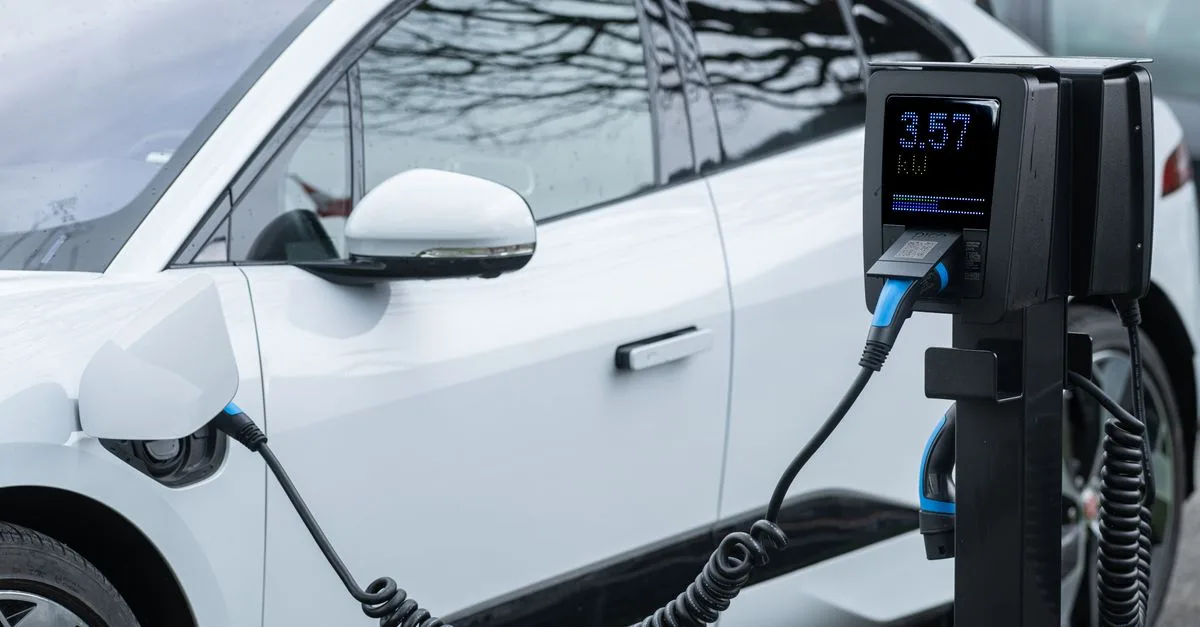
When people say lithium charger, they usually mean one of three things: a converter with a lithium charge profile, a solar charge controller with lithium settings, or a smart charger like a NOCO or Victron Blue Smart with a LiFePO4 mode. None of these are magic boxes with special lithium-only hardware inside.
What actually matters is the charge algorithm: the bulk voltage, the absorption voltage, the absorption time, and the float voltage. A charger becomes “lithium compatible” the moment it can be set to output those numbers, whether that is a factory default, a dip switch, or a custom profile you punch in yourself.
Tip: Before buying anything, pull your battery’s spec sheet and write down its recommended bulk/absorption voltage, float voltage, and max charge current. That single sheet of paper will save you from buying equipment you do not need.
When you genuinely do not need to buy anything new
If your rig already has a modern MPPT solar controller like a Victron SmartSolar or a Renogy Rover, there is a very good chance it already has a lithium profile built in or user-programmable. Same goes for newer converters. Progressive Dynamics has sold lithium-ready models like the PD9260ALV for years, and WFCO’s newer WF-8900 series includes a lithium mode you switch to with a dip switch on the board.
I wired a Sprinter van for a couple last spring who were convinced they needed a full charger replacement after upgrading to 300 amp-hours of lithium. Their WFCO converter turned out to have a lithium setting hiding behind a tiny recessed switch nobody had ever touched. Fifteen minutes of research and a small screwdriver saved them close to $600.
- Check your converter model number and search the manufacturer site for a lithium or “LFP” setting
- Check your solar controller for a lithium battery type option in its menu or app
- Check any inline DC-DC charger (like a Renogy DCC50S) for a lithium profile switch
- If all three already output 14.2 to 14.6V absorption, you may not need to buy anything
When you actually do need new equipment
The classic problem case is an older RV with a stock converter built for flooded lead-acid or AGM. Those units, common in trailers from the mid-2000s through early 2010s, often use a fixed multi-stage charge curve topping out around 13.6V to 13.8V. That is not enough voltage to fully charge lithium, and there is usually no way to adjust it.
In that case, yes, you need a real fix. That could be a full converter swap, a lithium-compatible DC-DC charger added inline, or in vehicles with alternator charging, a device that manages the voltage between the alternator and the lithium bank so you are not relying on the stock converter at all.
A mistake I see constantly is people leaving the old lead-acid converter in place “just for now” because replacing it feels like a bigger job than it is. Months later they are wondering why their battery monitor never reads 100 percent and their lithium bank seems to have less usable capacity than advertised. It is almost always this exact issue.
The generator and shore power question
If you charge primarily from shore power or a generator, your converter or inverter-charger is doing the real work, and solar becomes a secondary concern. A Xantrex Freedom XC or Victron MultiPlus set up with a lithium profile handles this cleanly, pulling 40 to 100 amps depending on size, which is a huge upgrade over a tired old converter limited to 20 or 30 amps.
If you mostly boondock and rely on solar, your MPPT controller’s lithium settings matter more than the converter, though you still want the converter set correctly for the times you do plug in at a campground or run a generator.
| Charging source | Needs lithium profile? | Typical fix if missing |
|---|---|---|
| Shore power converter | Yes, if fixed lead-acid curve | Swap to PD9260ALV or similar, $150-$250 |
| Solar charge controller | Yes, most modern units support it | Switch battery type in settings, usually free |
| Alternator/DC-DC charging | Yes, older systems lack this | Add Renogy DCC50S or Victron Orion, $150-$400 |
| Generator (via converter) | Same as shore power | Same converter fix covers both |
What happens if you skip it
Your BMS is not going to let a quality lithium battery overcharge into a dangerous state, so the fear of fire or explosion from using the wrong charger is overblown for name-brand batteries with proper protection circuits. The real cost is quieter than that.
Undercharging means you never actually reach full capacity, so your 300Ah bank might behave like a 240Ah bank. Chronic float voltage sitting too low or too high over months can also contribute to cell imbalance, which shows up eventually as one cell dragging down the whole pack’s usable capacity. Neither of these is dramatic, they just quietly rob you of the investment you made.
Warning: Some older automotive-style chargers include an equalization or desulfation cycle meant for flooded lead-acid batteries, which can push voltage well above 15V. That is genuinely risky for lithium and worth disabling or avoiding entirely, not just a minor inefficiency.
How to check what you actually have right now
Grab a multimeter and check your battery terminal voltage while the converter or charger is actively charging (ideally in what should be the absorption stage, an hour or two into a charge from a partial state of charge). If you are consistently seeing 14.2V to 14.6V, you are in good shape. If you are seeing 13.6V to 13.8V and it never climbs higher, that is your fixed lead-acid curve and you have your answer.
It is also worth reading through Victron’s lithium battery compatibility notes and the Battle Born charging guide, both of which lay out real numbers rather than vague marketing language. ABYC guidance on DC charging systems is also worth a skim if you are doing the wiring yourself, since proper fusing and wire gauge matter just as much as the charge profile.
If you are not sure whether your converter counts as lithium-ready, our guide on whether your RV converter can charge lithium walks through model numbers and how to check yours specifically. For the actual numbers a lithium charger should hit, see our breakdown of charger settings that keep lithium happy. And if you have confirmed you are stuck with an incompatible lead-acid charger, our piece on whether a lead-acid charger can charge lithium at all covers your practical options.
Figuring this out does not require an electrical engineering degree, just a multimeter, ten minutes, and your battery’s spec sheet. Most rigs built in the last five or six years already have what they need somewhere in a menu or behind a dip switch. Older rigs usually need one piece replaced, and once it is done you will not think about it again for years.