
The first van I wired for a client had a 280Ah lithium bank and a leftover 20 amp converter from the old lead-acid setup. It technically worked. It also meant a 14-hour charge time from 20 percent, which turned into a very grumpy phone call three days into a trip when the battery never quite caught up.
That is the story behind most charger sizing questions. People either inherit old gear, buy on price, or grab whatever amp rating sounds impressive on the box. None of that gets you the right number.
The quick version
- Start from battery capacity, not charger price: aim for 20 to 50 percent of your bank’s amp-hour rating in charger amps for daily use.
- Check your BMS charge current limit first. It is the hard ceiling no matter how big a charger you buy.
- Match wire gauge and breaker size to the charger’s real output, not a rough guess.
- Bigger is not always better. Oversized chargers waste money and stress your electrical panel for no charging benefit.
- Shore power, solar and generator charging each deserve their own amp budget in a mixed system.
Start With What Your Battery Can Actually Accept
Every LiFePO4 battery has a maximum charge current set by its internal BMS, printed right on the spec sheet. A Battle Born 100Ah battery is rated for a 100 amp max charge current, while many Li Time and Ampere Time 100Ah batteries cap around 50 amps.
That number is your ceiling. It does not matter if you install a 100 amp charger on a battery whose BMS only accepts 50 amps, because the BMS will throttle or shut off charging once it hits its limit.
Note: If you run multiple batteries in parallel, add up each battery’s rated charge current to get your bank’s combined ceiling. Two 100Ah Battle Borns in parallel give you a 200 amp theoretical max, though you would rarely charge at that full rate from a single source.
The 20 to 50 Percent Rule for Daily Charging
For routine shore power or generator charging, a charger sized at 20 to 50 percent of your bank’s total amp-hour capacity is the practical sweet spot. A 200Ah bank does well with a 40 to 60 amp charger. A 400Ah bank pairs nicely with an 80 to 120 amp unit.
This is not a hard physics rule, it is a real-world balance. LiFePO4 chemistry can handle much faster charging than that (see our breakdown of how fast you can actually charge LiFePO4), but going faster means bigger wire, bigger breakers, and a charger that pulls serious current from your shore power pedestal or generator.
A 30 amp shore power connection, which is standard on a lot of travel trailers, can only deliver about 3,600 watts total. At 13.6 volts of charge voltage, that is roughly 260 amps of DC output ceiling before you account for inverter losses and other loads running at the same time. In practice you rarely want your charger eating the whole budget.
Match the Charger to Your Charging Source
Shore power (AC to DC chargers)
A dedicated lithium charger like a Progressive Dynamics Inteli-Power with the lithium module, a Victron Skylla, or a Xantrex Freedom XC converts 120V AC into DC current at your set charge voltage. Size this one using the 20 to 50 percent rule above. For more on how AC charging fits into a full setup, see our guide on charging lithium on shore power.
DC-to-DC chargers
If you are charging off your engine alternator, a DC-to-DC charger like a Victron Orion-Tr Smart or Renogy DCC comes in fixed sizes, typically 30, 50 or a stackable combination. These are limited by both your alternator output and your wire run from the starter battery, so bigger is not automatically better here either.
Solar charge controllers
Solar sizing is a different formula entirely, driven by panel wattage rather than battery capacity, so it deserves its own calculation rather than borrowing the shore power rule.
Tip: If you are running multiple charge sources at once (solar plus shore power plus alternator), add up their combined DC output and compare it against your BMS’s total charge current rating, not just each source individually.
Wire Gauge and Breaker Sizing Go Hand in Hand
Once you know your target amps, the wire and breaker size follow directly. This is the step people skip, and it is the mistake I see constantly: someone buys a 60 amp charger, then wires it with 10 AWG because that is what was in the parts bin.
| Charger Output | Minimum Wire (short run, under 10 ft) | Breaker Size |
|---|---|---|
| 20 amps | 12 AWG | 25 amp |
| 30 amps | 10 AWG | 40 amp |
| 40 amps | 8 AWG | 50 amp |
| 60 amps | 6 AWG | 80 amp |
| 100 amps | 2 AWG | 125 amp |
These numbers assume short runs and reasonable ambient temperatures. Longer cable runs need heavier gauge to stay under a 3 percent voltage drop, which matters more with lithium than lead-acid because a sagging charge voltage can trick the charger into thinking the battery is further along than it is. Blue Sea Systems publishes solid DC circuit sizing references if you want to run your own numbers for longer runs.
A Real Sizing Walkthrough
Say you have a 300Ah bank built from three 100Ah batteries in parallel, each with a 50 amp BMS charge limit. Your combined ceiling is 150 amps.
Using the 20 to 50 percent rule, a reasonable daily charger lands between 60 and 150 amps. Budget and your panel’s available breaker space usually settle the rest. An 80 amp charger charges that bank from 20 percent to full in a little under 3 hours, which fits most people’s actual routine of running a generator or plugging into shore power for an evening.
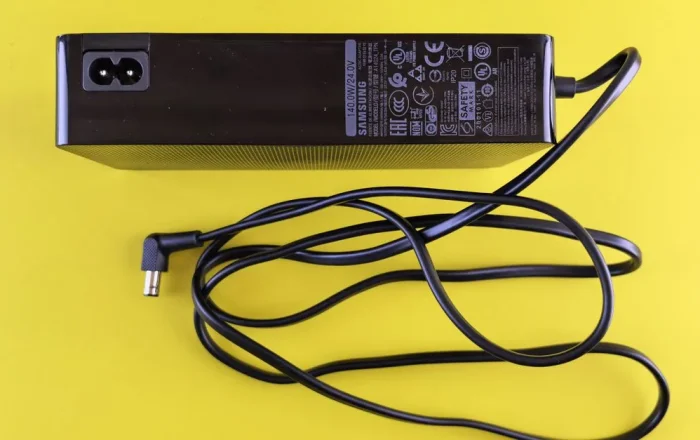
Compare that to keeping the old 20 amp lead-acid-era converter: the same charge would take close to 11 hours, which almost never lines up with a real travel schedule.
The Common Oversizing Mistake
People assume more amps is always better because faster charging sounds like a win. In practice, oversizing past your BMS limit wastes money on a charger that never runs at its rated output, and oversizing past what your wire and breaker were built for is a genuine fire risk.
I have also seen owners install a charger sized for a future battery bank expansion that never happened, running a 200 amp unit on a 100Ah bank for two years. That extra capacity bought nothing but a bigger price tag and an oversized breaker panel.
Warning: Never assume your old lead-acid converter or charger is safe to reuse just because the amp rating looks adequate. Many older units use a charge profile that never reaches proper lithium voltage, which we cover in detail in our piece on the right charge voltage for LiFePO4.
Checklist Before You Buy
- Find your BMS max charge current rating (check the manufacturer spec sheet, not just the battery label)
- Add up combined BMS charge current if you have multiple batteries in parallel
- Calculate 20 to 50 percent of total bank amp-hours as your target charger output
- Confirm your shore power or generator can actually deliver that many watts
- Size wire and breaker to the charger’s continuous amp rating, not the average
- Verify the charger has a genuine lithium or LiFePO4 charge profile, not just a “boost” mode
If your existing converter is original equipment from the factory, there is a decent chance it was never designed with lithium in mind at all, which is a bigger issue than amps alone. Our guide on whether your RV converter will charge lithium walks through how to check compatibility before you spend a dime on a new charger.
Sizing a lithium charger really comes down to three numbers you can find in five minutes: your BMS charge limit, your total bank capacity, and what your power source can deliver. Do that math before you shop, not after, and you will end up with a charger that actually matches the battery you paid good money for.