The quick version
- Most 12V LiFePO4 batteries want an absorption voltage of 14.2V to 14.6V, and 24V packs want 28.4V to 29.2V, but the exact number depends on the brand.
- Float voltage for lithium should sit around 13.6V (12V) or 27.2V (24V), well below absorption, or you can often skip float entirely.
- Charging too low wastes 10 to 20 percent of your usable capacity. Charging too high stresses cells and can trip the BMS.
- Always confirm your battery’s exact spec sheet. A 0.4V difference between brands is common and it matters.
I got a call a few winters back from a guy in Arizona who swore his brand new 300 amp hour lithium bank was only giving him 220 amp hours of real use. He had done everything right on paper: good cables, correct fusing, solid BMS. His charger, though, was still set to the old flooded lead-acid profile from the previous owner of his motorhome, absorbing at 14.8V and floating at 13.2V. Close, but not close enough, and in the wrong direction on both ends.
That phone call is basically why this article exists. Charge voltage is the single setting most likely to be wrong on a lithium conversion, and it is also the easiest one to fix once you know what number you are chasing.
Why voltage matters so much more with lithium
Lead-acid batteries are forgiving. You can overcharge them a little, undercharge them a little, and they shrug it off (aside from some sulfation over time). LiFePO4 chemistry does not work that way. The voltage curve on a lithium cell is famously flat, which means the battery sits around 13.2V to 13.4V resting for most of its usable range, then climbs sharply only near full charge.
That flat curve is actually the whole reason charge voltage matters so much. Because there is so little voltage change across 80 percent of the state of charge, your charger cannot use voltage alone to gently estimate how full the battery is the way it can with lead-acid. It needs to hit a specific target voltage to fully saturate the cells and let the internal battery management system (BMS) balance them.
Note: The chemistry itself is lithium iron phosphate, which the Department of Energy and battery researchers favor partly because of its stable voltage plateau and strong thermal stability compared to other lithium chemistries. You can read more on the underlying chemistry on Wikipedia’s LiFePO4 overview.
The actual numbers: 12V and 24V charge voltage charts
Here is what I use as a baseline, cross-referenced against the datasheets I have pulled for Battle Born, Li Time, Ampere Time and Renogy over the years. Your specific battery may vary by a tenth or two, so treat this as a strong starting point, not gospel.
| System voltage | Absorption (bulk target) | Float | Typical BMS high cutoff |
|---|---|---|---|
| 12V | 14.2V to 14.6V | 13.6V (or none) | 14.6V to 14.8V per battery |
| 24V | 28.4V to 29.2V | 27.2V | 29.2V to 29.6V per bank |
| 48V | 56.8V to 58.4V | 54.4V | 58.4V to 59.2V per bank |
Battle Born’s own documentation lists 14.4V as their recommended absorption voltage for a single 12V 100Ah battery, with a float of 13.6V. Victron’s lithium presets in their battery compatibility documentation land in a similar 14.2V to 14.4V range for most LiFePO4 packs they support. Those two data points alone tell you the industry has converged on a fairly narrow window, which is reassuring if you are trying to set a multi-brand system.
Why 14.4V beats 14.6V for most setups (and when it does not)
A mistake I see constantly is people assuming higher is always better, since it feels like “more complete” charging. In practice, 14.4V versus 14.6V on a healthy 12V pack usually nets you less than 1 percent difference in actual stored capacity, because you are already deep into that steep part of the voltage curve.
What 14.6V does buy you is faster BMS cell balancing, since the higher voltage pushes more current through the balancing circuits near the top of charge. If your bank is brand new or you suspect the cells are not well matched yet, running 14.6V occasionally for a full charge cycle can help even things out.
For daily use, I lean toward 14.2V to 14.4V. It gets you effectively full capacity with noticeably less time spent sitting at peak voltage, which is where most of the long-term stress on lithium cells actually accumulates.
Setting voltage on real chargers: what to actually look for
Every charger brand labels this menu differently, which trips people up constantly.
- On a Victron MultiPlus or Orion-Tr, look for the “Absorption voltage” and “Float voltage” fields in VictronConnect under the battery preset, or select their built-in LiFePO4 preset and verify it against your battery’s spec sheet.
- On a Progressive Dynamics Inteli-Power with the lithium module (or the PD9160ALV series), the lithium setting is usually a DIP switch or a distinct charge profile rather than a manual voltage entry.
- On a WFCO converter, older models have no lithium mode at all, and you are stuck at lead-acid float voltages around 13.6V unless you replace or add a dedicated charger.
- On a Xantrex Freedom XC or similar inverter-charger, dig into the charge profile settings and manually select or build a lithium profile matching your battery’s datasheet numbers.
Tip: If your charger only offers preset profiles like “AGM,” “Gel,” “Flooded,” and “Lithium,” always confirm what voltage that lithium preset actually outputs. I have seen generic lithium presets set as low as 14.0V and as high as 14.8V, so a preset labeled correctly is not a guarantee it matches your specific battery.
What happens when the voltage is wrong in each direction
Set too low, and you simply never reach full charge. Your battery monitor might show 100 percent because it is guessing off voltage or a rough amp-hour count, but the actual stored energy is short. This is the silent capacity thief, and it is why the Arizona owner I mentioned earlier lost 25 percent of his bank without any error message or warning light.
Set too high, and the risk shifts. Most BMS units are built with a real safety margin, so charging at 14.8V on a battery rated for 14.6V absorption will not instantly destroy anything. Over months and years, though, spending more time at peak voltage accelerates the slow capacity fade every lithium cell experiences, and it raises the odds of the BMS tripping a high-voltage disconnect mid-charge, which can look like a random charging failure if you do not know what caused it.
Temperature and voltage: the piece people forget
Charge voltage targets assume moderate temperatures, generally above 40°F (4°C). Most LiFePO4 BMS units block charging entirely below freezing to protect the cells, regardless of what voltage your charger is set to output.
Some premium batteries, including certain Battle Born and Li Time models with built-in heating pads, adjust this automatically and will draw a little power to warm themselves before accepting a charge. If your battery does not have that feature, the charge voltage setting becomes irrelevant below freezing since the BMS simply will not let current in at all.
Checking your own setup
Pull your battery’s actual spec sheet (not a general lithium guide, the one for your specific model) and write down the recommended absorption and float voltages. Then check your charger’s current settings, whether that means a DIP switch, an app like VictronConnect, or a front panel menu.
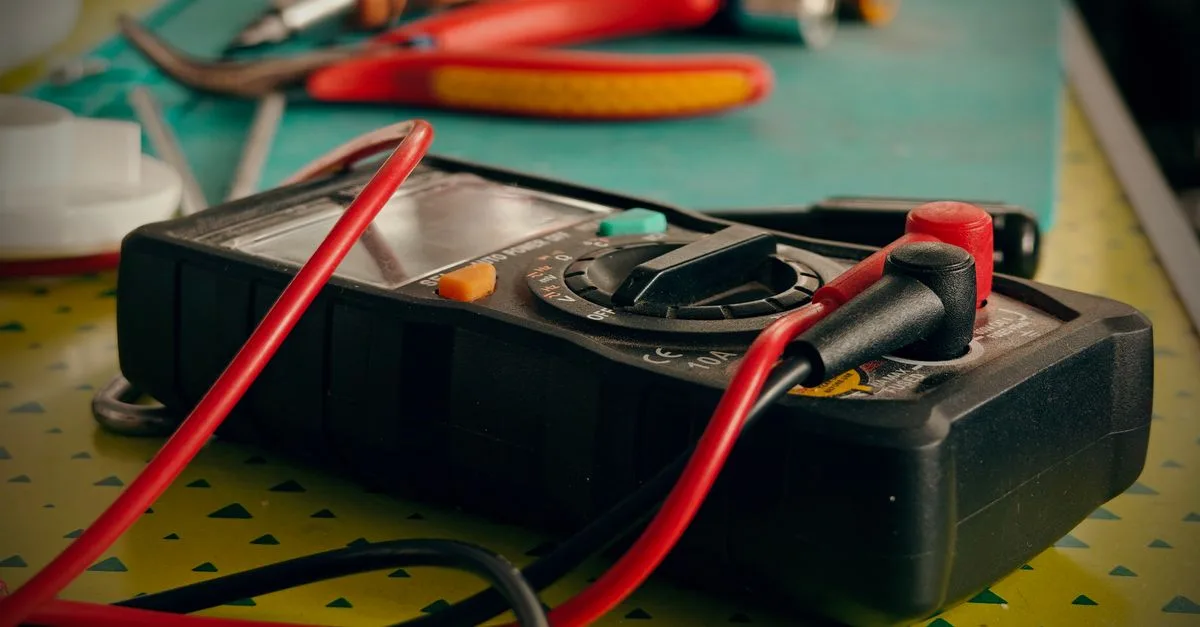
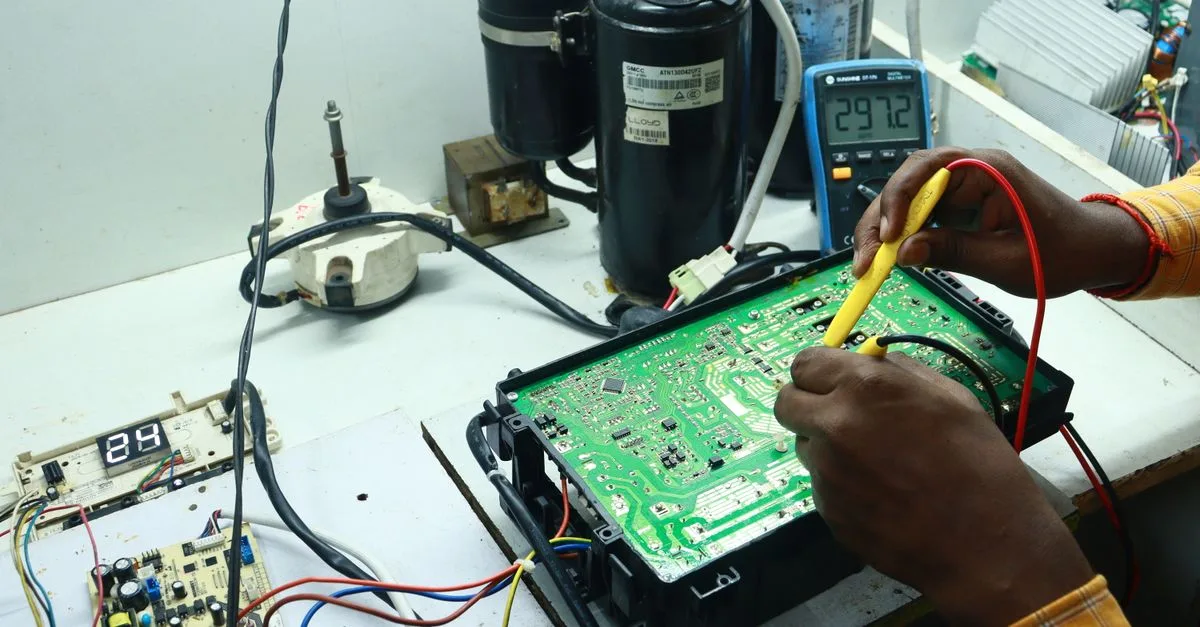
A cheap multimeter at the battery terminals during a charge cycle, ideally near the end of absorption, tells you the real story better than any app. If the number on your meter is more than 0.2V off from your battery’s spec, it is worth adjusting.
Getting this one setting dialed in is one of the highest-value ten minutes you can spend on a lithium system. If you are still working out whether your existing converter can even reach these voltages, it is worth reading through what makes an RV converter lithium compatible before you assume the fix is just a settings change. For the bigger picture on how absorption and float fit into the whole charge cycle, our breakdown of bulk, absorption and float charging for lithium connects this voltage number to the stages around it. And if you want a deeper look at why lithium spends so little time in absorption compared to lead-acid, see our piece on why lithium needs less absorption time.
Once the voltage is right, this is usually a set-it-and-forget-it fix. Write the number down somewhere, check it again after any charger firmware update or battery swap, and you will get the full capacity you paid for every single charge cycle.