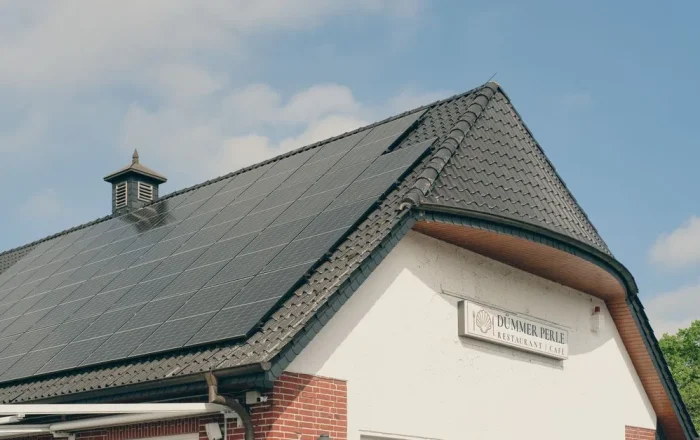
I once spent an entire afternoon troubleshooting a “broken” 300 watt panel on a Sprinter van build before I figured out the actual problem: a roof-mounted vent fan cast a two-inch shadow across the bottom edge of the panel every afternoon. That sliver of shade was tanking the panel’s output by more than half. Nothing was broken. The physics of how solar cells are wired just do not forgive shade the way most people assume.
This trips up a huge number of RV, van and boat owners moving to lithium, because lithium banks can accept fast charging and people expect their solar math to just work. Then they park under a tree for lunch, glance at the controller, and see almost nothing coming in. Here is what is actually happening and what you can do about it.
Why a Little Shade Causes a Lot of Loss
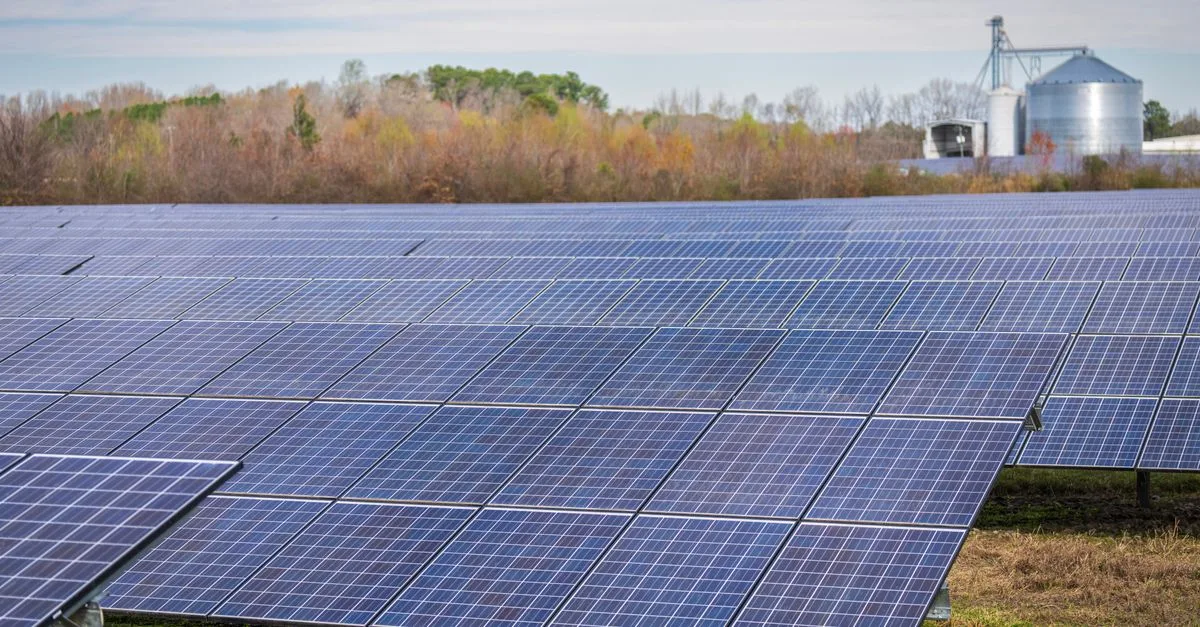
Solar panels are built from individual cells wired in series, typically 60 to 72 cells per panel. In a series circuit, current is limited by the weakest link, and a shaded cell produces dramatically less current than its unshaded neighbors.
Since every cell in that string has to pass the same current, the whole string gets choked down to whatever the shaded cell can handle. Cover just one cell out of 60 and you are not losing 1/60th of your power. You can lose 50 to 80 percent of that panel’s output, sometimes more.
Note: This is different from how a fully overcast sky affects output. Uniform cloud cover reduces irradiance evenly across every cell, so output drops proportionally. Partial shade on a clear day is the scenario that causes the disproportionate crash.
The Bypass Diode Safety Net (and Its Limits)
Panel manufacturers know about this problem, which is why decent panels include bypass diodes, usually three per panel, each covering a section of roughly 20 cells. When a cell in one section gets shaded, its diode lets current route around that section instead of forcing the full string current through it.
This helps a lot. Without bypass diodes, a shaded cell can also overheat and become a “hot spot,” which is a genuine fire and panel-damage risk, not just an efficiency issue. With diodes, that section is skipped and the rest of the panel keeps producing.
But skipped is not the same as replaced. If one-third of your panel is bypassed, you have lost roughly a third of that panel’s rated wattage for as long as the shadow sits there, even though the panel is not “broken.” I see people assume a panel is failing when really a vent or antenna mount is shading a permanent stripe across it every single day around 2pm.
MPPT vs PWM: Does the Controller Type Matter?
It does, but people overestimate how much it can fix. An MPPT controller continuously hunts for the voltage and current combination that pulls the maximum available wattage out of the array as conditions change, which includes partial shade scenarios.
A PWM controller just clamps panel voltage down near battery voltage and cannot chase that optimal point, so it performs noticeably worse under any kind of shading. If you are comparing controller types for a lithium bank, our guide on MPPT versus PWM for a lithium bank goes deeper into why MPPT is usually worth the extra cost.
Still, MPPT cannot undo the series-string bottleneck itself. It optimizes around the loss, it does not eliminate it. If your rig regularly deals with tree cover, dock shade, or shadows from your own roof gear, controller choice is one piece of the puzzle, not the whole fix.
Series vs Parallel Wiring Changes the Damage Pattern
How you wire multiple panels together matters more than most installers realize. Wire two 200 watt panels in series and shade hits one of them, and you can drag both panels down because they now share one current path.
Wire the same two panels in parallel and a shadow on one panel only cuts that panel’s individual contribution. The other keeps producing at full output. We cover the tradeoffs, including voltage and wire-gauge implications, in our series versus parallel breakdown.
Parallel wiring needs thicker wire runs because current adds up instead of voltage, which is a real cost consideration on longer roof-to-controller runs. For a boat or van with predictable shading (a mast, a roof AC, a vent), I generally lean parallel or use a controller with independent MPPT channels per panel string if the budget allows it, something like Victron’s SmartSolar line with multiple charge controllers rather than one big combined string.
A Real-World Layout Mistake
A common mistake I see on van conversions: someone mounts two panels in a line down the center of the roof, right behind the roof-mounted AC unit. It looks clean and symmetric in photos.
Then every afternoon, as the sun angle shifts, the AC unit’s shadow creeps across the rear third of the back panel for two or three hours. That panel’s bypass diode kicks in, the section shuts down, and the owner loses 60 to 100 watts of production during peak charging hours, every single day, for the life of the rig.
The fix costs nothing once you know to look for it: shift the panel layout during install so no roof hardware casts a shadow across panel cells at any time of day the rig is typically parked and charging. Walk your roof plan through sun angles for both a summer and winter parking scenario before you drill a single hole.
Flexible Panels and Curved-Roof Shade Behavior
Flexible panels bent around a curved surface, common on vans and some boats, create a self-shading problem even without external obstacles. The curve itself changes the sun angle across the panel’s own surface throughout the day.
Rigid panels mounted flat and level do not have this issue, which is one reason we generally favor rigid panels for permanent installs where roof space allows it. Our flexible versus rigid panel comparison covers the durability and mounting differences too, but the shade behavior alone is worth factoring into that decision.
Practical Steps That Actually Reduce Shade Loss
- Map your roof layout against every fixed shadow source (vents, AC units, antennas, racks) before mounting panels, not after.
- Choose panels rated for at least three bypass diodes if buying new; check the spec sheet, most reputable brands like Renogy list this.
- Consider parallel wiring or per-panel MPPT if your parking spots regularly involve tree cover or dock shading.
- If you frequently boondock under partial tree cover, size your array roughly 20 to 30% larger than a full-sun calculation would suggest, as a buffer.
- Add a portable panel as backup for heavily shaded campsites since a ground panel can be repositioned to chase sun, unlike a fixed roof array.
Tip: Before committing to a permanent mounting layout, tape cardboard cutouts the size of your panels to the roof and observe shadow patterns across a full day. It is a five-minute check that can save you months of mysteriously low charging.
What This Means for Your Lithium Charging Plan
Lithium batteries do not care how the power arrives, they will happily accept whatever amperage your solar setup delivers up to their charge current limit. The shade problem is purely about how much of your rated wattage you actually realize on a given day.
If you are still working out how many watts of solar your bank needs in the first place, start with our full solar charging setup guide for lithium banks, then apply the shade-loss math on top of that baseline number. According to the National Renewable Energy Laboratory’s research on photovoltaic system losses, partial shading remains one of the largest and most underestimated derating factors in real-world array performance, right alongside temperature and soiling.
Shade is not something you can wire your way entirely out of, but you can wire your way out of the worst of it. A little planning at install time, the right controller, and sensible panel placement turns “why is my array only making 80 watts” into a problem you rarely think about again.