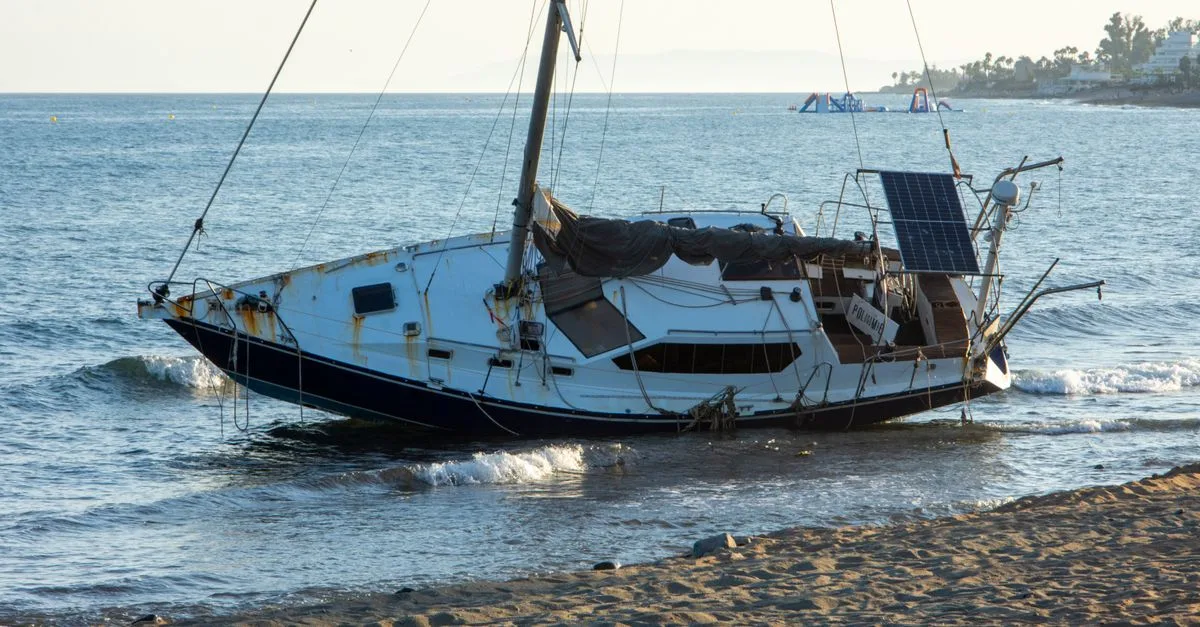
A couple I’ll call Dan and Priya (not their real names, but a real story) bought a 42-foot sloop and moved aboard full time in the Sea of Cortez. They installed 300 watts of solar because that’s what fit on the bimini, paired it with a 400Ah lithium bank, and figured they were set. Three weeks in, they were running the engine every single morning just to keep the fridge alive. The panels weren’t broken. They were just undersized for the boat they actually lived on.
That gap between “solar looks impressive on paper” and “solar actually keeps up with a liveaboard” is where most sizing mistakes happen. Let’s build the number properly, using their boat as the working example.
Start With What the Boat Actually Draws Per Day
Before you can size panels, you need a daily amp hour budget. Dan and Priya’s loads looked like this once we itemized everything, including the stuff people forget like anchor lights and phone chargers.
| Load | Draw (amps) | Hours/day | Amp hours/day |
|---|---|---|---|
| 12V compressor fridge | 4A (cycling ~40%) | 24 | 38 |
| Autopilot (underway days) | 3A | 4 | 12 |
| Cabin LED lighting | 1.5A | 4 | 6 |
| Chartplotter + VHF | 2A | 6 | 12 |
| Water pump | 5A | 0.5 | 2.5 |
| Inverter (laptop, coffee grinder) | 8A avg | 1.5 | 12 |
| Total | ~82.5 Ah/day |
Call it 85 amp hours a day at 12V, which is roughly 1,020 watt hours. That’s a real, fairly typical liveaboard load, not a minimalist weekend cruiser and not a boat running air conditioning off the bank.
Convert Amp Hours to Solar Watts, With Real Losses
Here’s the formula I use on every boat consult, and it’s the same one I’d use sizing solar for any lithium bank: divide your daily watt hour need by your realistic peak sun hours, then divide again by your system efficiency.
Boats get worse sun hours than a flat RV rooftop because of rigging, sails, biminis, and the boat swinging on anchor. Where an RV in Arizona might see 5.5 real peak sun hours, a sailboat anchored in the same spot often nets 3.5 to 4 because of shade from the mast and boom moving across the panels as the boat swings.
Rule of thumb: take your best-case peak sun hours for your latitude and season, then subtract 1 to 1.5 hours for rigging and swing shade on a sailboat. Powerboats and cats with clear coachroof space lose less, maybe 0.5 to 1 hour.
For Dan and Priya in the Sea of Cortez in winter, that’s about 4 usable peak sun hours. Running the math: 1,020 watt hours divided by 4 hours divided by 0.75 (accounting for MPPT conversion loss, wiring loss, and the fact panels rarely hit full rated output in real heat) gives you 340 watts minimum, and that’s a bare minimum with zero margin for a cloudy day.
Why I Always Add a Buffer, and How Much
A mistake I see constantly is sizing to the exact daily average and then being shocked when three overcast days in a row drain the bank. Solar isn’t consistent day to day, and a liveaboard doesn’t get to just “wait it out” the way a weekend camper can.
I recommend sizing to 1.4 to 1.6 times the bare minimum for a full-time boat. For Dan and Priya’s 340-watt minimum, that lands at 475 to 545 watts as a comfortable working target. Round up to what fits the deck, and in their case that meant 600 watts once we found room on the bimini frame and added a small rail-mounted panel.
The quick version
- Build a real daily amp hour budget first, don’t guess. Most liveaboards run 70 to 110 Ah/day at 12V.
- Boats lose 20-40% of potential solar output to rigging and swing shade, worse than an RV or van rooftop.
- Divide daily watt hours by realistic peak sun hours, then by roughly 0.75 for system losses, to get a bare minimum wattage.
- Multiply that minimum by 1.4-1.6x for a buffer against cloudy runs, since boats can’t easily “wait out” a low battery the way land vehicles can.
- A typical liveaboard on a 400Ah lithium bank ends up needing 600-900 watts of panel, sometimes more in northern latitudes or winter.
Where the Watts Actually Fit on a Boat
Deck space is the real constraint on a boat in a way it rarely is on an RV roof. You’re negotiating with a bimini frame, a dodger, solar arches, davits, and the boom’s swing radius.
Most liveaboard sailboats end up with a mix: rigid panels on a stern arch (best angle, least shade, easiest to keep clean), semi-flexible panels laid on the bimini top, and sometimes a portable panel that gets deployed at anchor and stowed underway. If you’re weighing rigid against flexible for your own build, I go through the tradeoffs in detail in flexible versus rigid solar panels, and the short version is rigid wins on longevity and output, flexible wins on weight and deck-hugging installs where you truly have no other option.
A solar arch is worth the fabrication cost if your budget allows it. Getting panels up off the bimini and into clean air, angled slightly, and shaded by nothing but the mast at certain points of sail can add 15 to 20 percent effective output compared to the same wattage laid flat on canvas.
Matching the Charge Controller to Your Array
Once you know your wattage, size the controller with headroom, not exactly to the number. For a 600-watt 12V array, that’s roughly 50 amps at peak, so a 60-amp Victron SmartSolar MPPT or a comparable Renogy or Epever unit gives you room to add a panel later without swapping hardware.
If your panels see different shading (say, two on the arch and one flat on the bimini), consider two smaller MPPT controllers instead of one large one wired in parallel. Shaded panels in a single series string can drag down the whole array’s output, and a second controller isolates that problem. I cover the full process in how to size an MPPT controller if you want the deeper walkthrough on amperage and voltage matching.
The Anchor-Swing Problem Nobody Warns You About
This one catches new liveaboards off guard. Your boat swings on its anchor chain through the day as wind and current shift, which means the sun angle on a fixed panel changes constantly, and the mast’s shadow sweeps across different panels at different times.
There’s no perfect fix for this short of a tracking mount, which almost nobody runs on a cruising boat. What helps is spreading panels across multiple mounting points (arch, bimini, rail) rather than clustering them all in one spot, so when one panel gets shaded by the boom swinging through, the others are still working.
Sizing for Winter or Higher Latitudes
Dan and Priya’s 600 watts works great in Mexico in winter with 4+ hours of usable sun. A liveaboard wintering in the Pacific Northwest or New England is a different animal entirely, sometimes seeing 2 to 2.5 usable sun hours on a short December day.
For that situation, the math pushes toward 900 to 1,000+ watts, and even then most northern liveaboards run a diesel heater or engine charging as backup rather than trying to solar their way through a Seattle winter. If that’s your situation, the broader seasonal planning in getting solar power in winter applies just as much to a boat as it does to an RV, since the core problem (short days, low sun angle, more clouds) is identical.
What This Looked Like Once Installed
Dan and Priya ended up with 600 watts split across a 400-watt rigid pair on a new stern arch and 200 watts of semi-flexible on the bimini, running into a 60-amp Victron MPPT feeding their 400Ah Battle Born-equivalent lithium bank. On a clear winter day at anchor they were pulling in 220 to 260 amp hours, more than double their 85 Ah daily need, which gave them real margin for cloudy stretches and let them stop running the engine for charging almost entirely.
That margin matters more than hitting some theoretical minimum. A boat that’s exactly balanced on paper is a boat that’s stressed every time a front rolls through, and if you want to see how that daily math scales across a whole cruising season, the numbers work the same way I break down in boondocking power and solar math. Size for the bad days, not the good ones, and the good days take care of themselves.